Nature Wallpaper, Room by Room: Matching the Scene to the Space
Nature wallpaper puts a view on a wall that has none. Used room by room, it does different jobs: calm in a bedroom, energy in a hallway, focus in an office. Here is how to choose it space by space so the scene fits the way you use each room, and a few notes on ordering it well.
Living room: pick one wide view
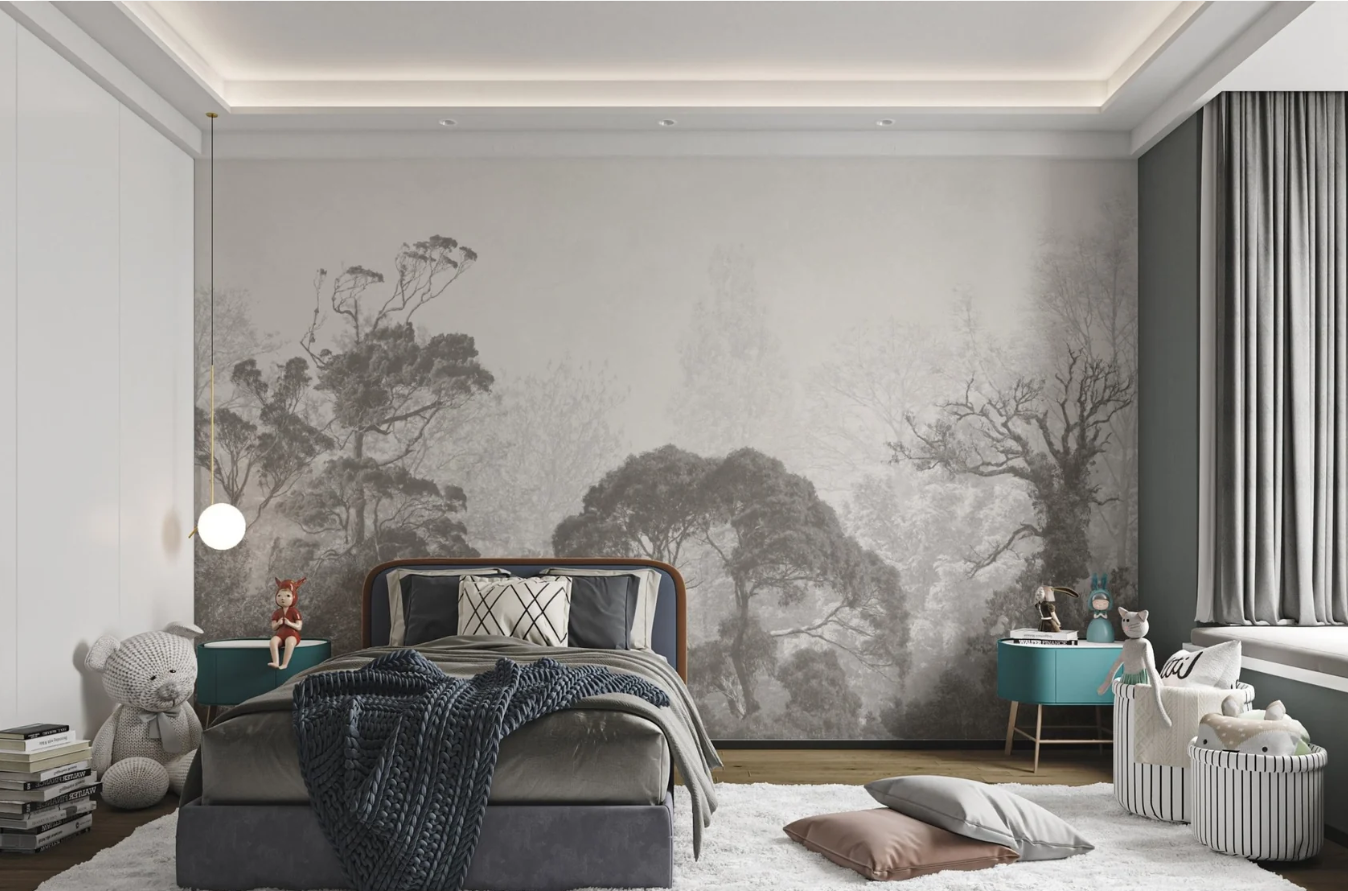
The living room is where a wide landscape earns its keep. A single expansive scene behind the sofa gives the room a focal point and a sense of depth, which helps a boxy room feel larger. Keep the palette muted so the wall supports conversation rather than shouting over it. A tree wallpaper scene, with tall trunks and filtered light, adds height to a room with a low ceiling because the vertical lines draw the eye up. Hang art sparingly on the other walls so the scene stays the main event, and let the sofa and rug sit in colors pulled from the scene rather than competing with it.
Bedroom: choose calm over drama
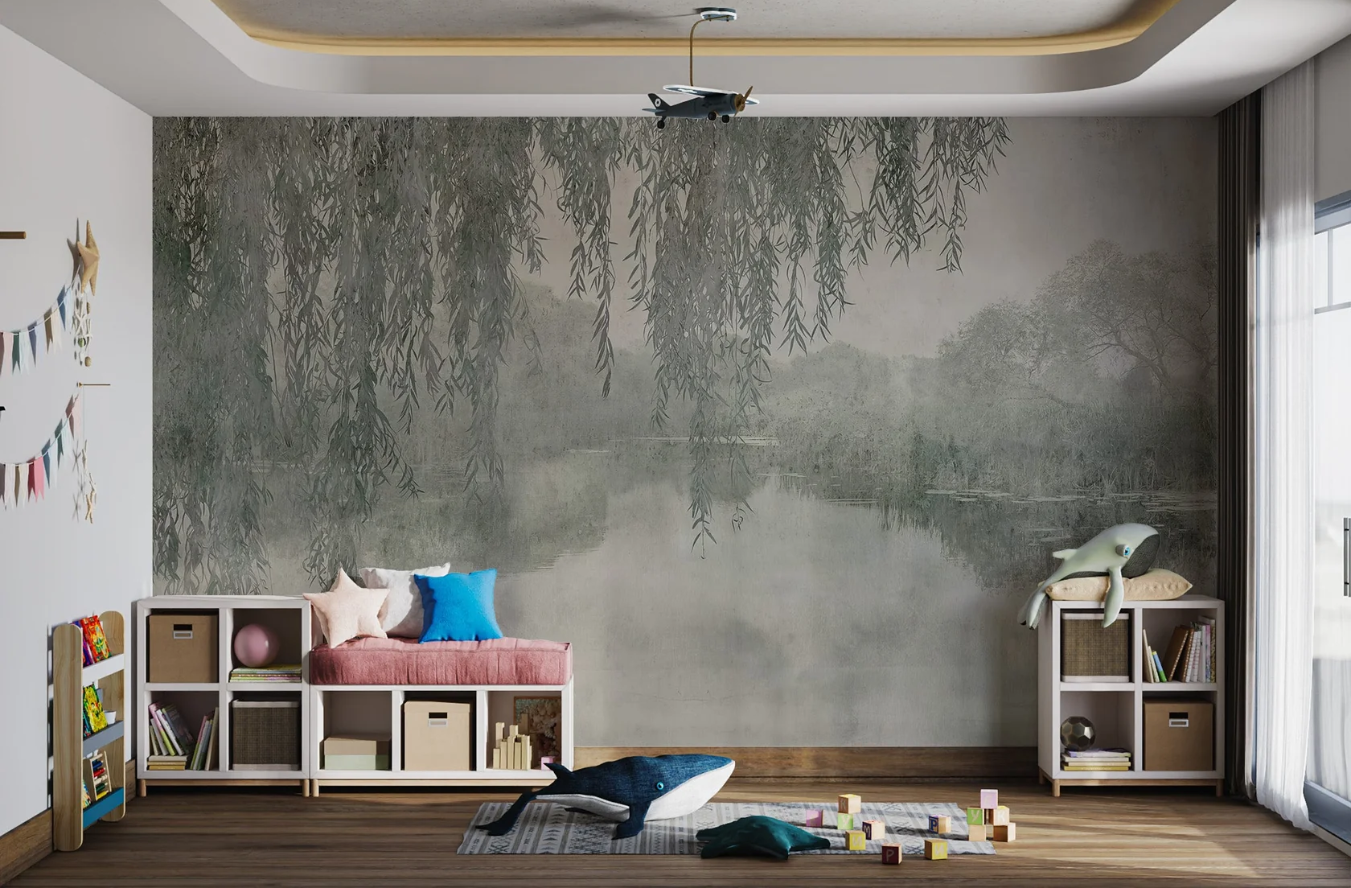
In a bedroom you want the scene to settle you, not stimulate you, so lean toward misty, low-contrast views rather than bright ones. Mountains at dawn, a quiet lake, or a pale forest all work. Put the scene on the wall behind the headboard so you see it when you walk in but not when you lie down, which keeps it restful. This misty lake design is the kind of muted, hazy view that suits a room meant for sleep, where a high-contrast scene would keep the space feeling busy. Keep bedside surfaces clear so the wall is the one considered thing in the room.
Hallway and stairs: use a scene to lead the eye
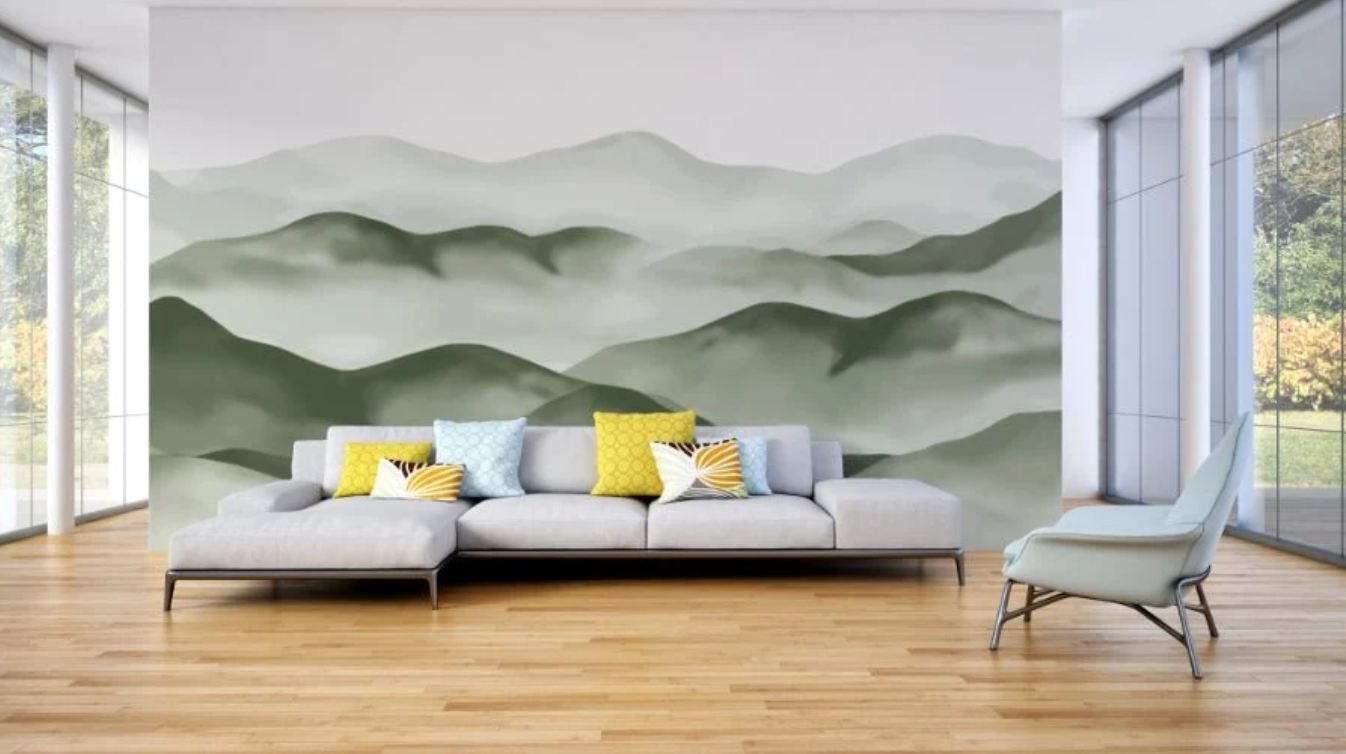
A hallway has no furniture to carry interest, so the walls do all the work. A nature scene here pulls you through the space and makes a narrow corridor feel intentional rather than leftover. Bigger, bolder views suit a hallway because you pass through quickly and rarely sit and stare. A mountain wallpaper scene gives a short hallway a sense of distance it does not physically have. Keep the flooring and any console table simple so the wall stays the story, and mind the light, since hallways are often dim and a very dark scene can close them in further.
Home office: frame the desk, not the whole room
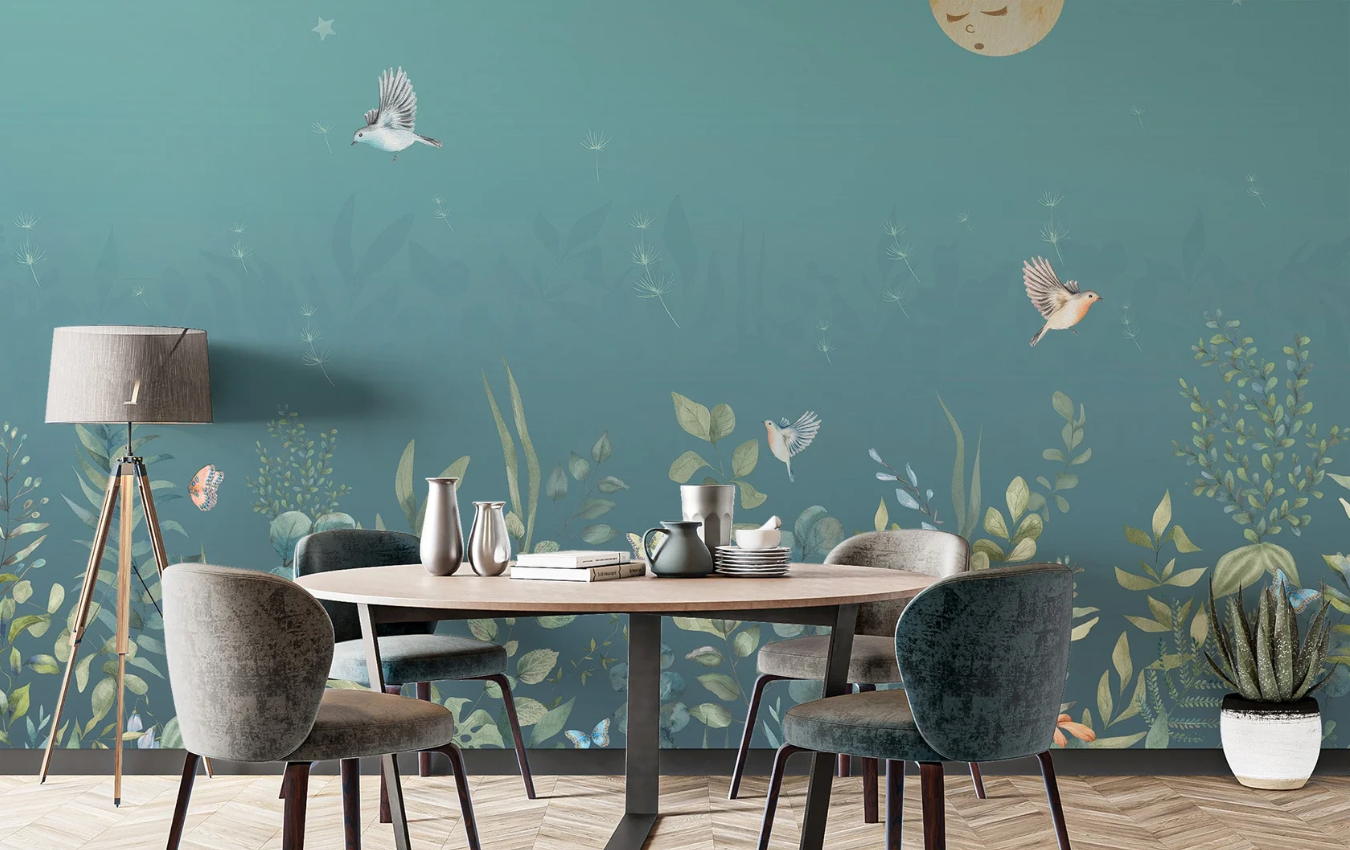
Behind a desk, a nature scene reads well on video calls and gives your eyes somewhere restful to land between tasks. Keep it to the one wall the camera sees. Green scenes, foliage and canopy views are easy on the eyes for long stretches, which matters if you look at the wall all day. A botanical wallpaper design with leaves and branches gives that green backdrop without a literal landscape, which some people find less distracting than a full vista behind them. Position the wall so it sits behind you on calls and in front of you when you look up to think.
Kids room: pick a friendly, gentle scene
Children respond to nature scenes with animals and gentle detail, and a hand-painted style feels warmer in a young room than a sharp photograph. Keep the palette gentle so the room stays calm at bedtime. A watercolor woodland with animals, like nature wallpaper that bring your hike home explores, gives a child something to look at without the room feeling loud. Removable options make sense here, since a child's taste changes faster than the paint does, and a scene they outgrow can come down cleanly.
Before you order
Whatever the room, measure every wall you plan to cover, look at the scene at the scale it will print, and check it in both daylight and lamplight, because a landscape can shift a lot between the two. If you decide to buy nature wallpaper online, order the whole wall in one batch so the color matches across it, and note where furniture will sit so the best part of the scene is not hidden. Match the scene's mood to the room's job, restful where you rest and lively where you move, and the wall will feel like it belongs rather than like a picture stuck on for effect. If you are still weighing scenes, a read like can nature wallpaper look like a real forest sets sensible expectations about realism before you buy.